Many law firms start looking for software with a simple question: Do we need a CRM?
At first, the answer may seem obvious. A law firm works with clients, leads, contacts, follow-ups, documents, deadlines, invoices, and communication. So a CRM sounds like the right solution.
But legal work is different from a typical sales process.
For a law firm, client management does not end when a lead becomes a client. In many cases, that is exactly when the real work begins: a matter is opened, documents are collected, tasks are assigned, deadlines appear, time is tracked, invoices are issued, payments are controlled, and the team needs visibility into what is happening.
This is where the difference between a regular CRM and legal practice management software becomes important.
A CRM helps manage sales relationships. Legal practice management software helps manage the work of the law firm.
For many legal teams, understanding this difference is the key to choosing the right system.
What is a CRM?
CRM stands for Customer Relationship Management.
A typical CRM is designed to help businesses manage leads, contacts, sales opportunities, pipelines, follow-ups, and marketing activity.
In most industries, CRM systems are used to answer questions such as:
Who are our potential clients?
What stage is each lead in?
Who should follow up next?
Which deals are likely to close?
Which campaigns generated new opportunities?
How is the sales team performing?
For companies with active sales departments, outbound teams, marketing campaigns, lead scoring, and automated email sequences, a CRM can be very useful.
But a law firm usually needs more than a sales pipeline.
A law firm needs a system that connects clients with legal matters, documents, deadlines, time, billing, payments, reporting, and team collaboration.
That is not what most general-purpose CRMs are built for.
What is legal practice management software?
Legal practice management software is designed specifically for the daily work of law firms.
Instead of focusing only on leads and sales stages, it is built around legal matters, clients, documents, tasks, time, billing, reporting, and team workflows.
A professional legal practice management platform helps law firms manage:
matters and projects;
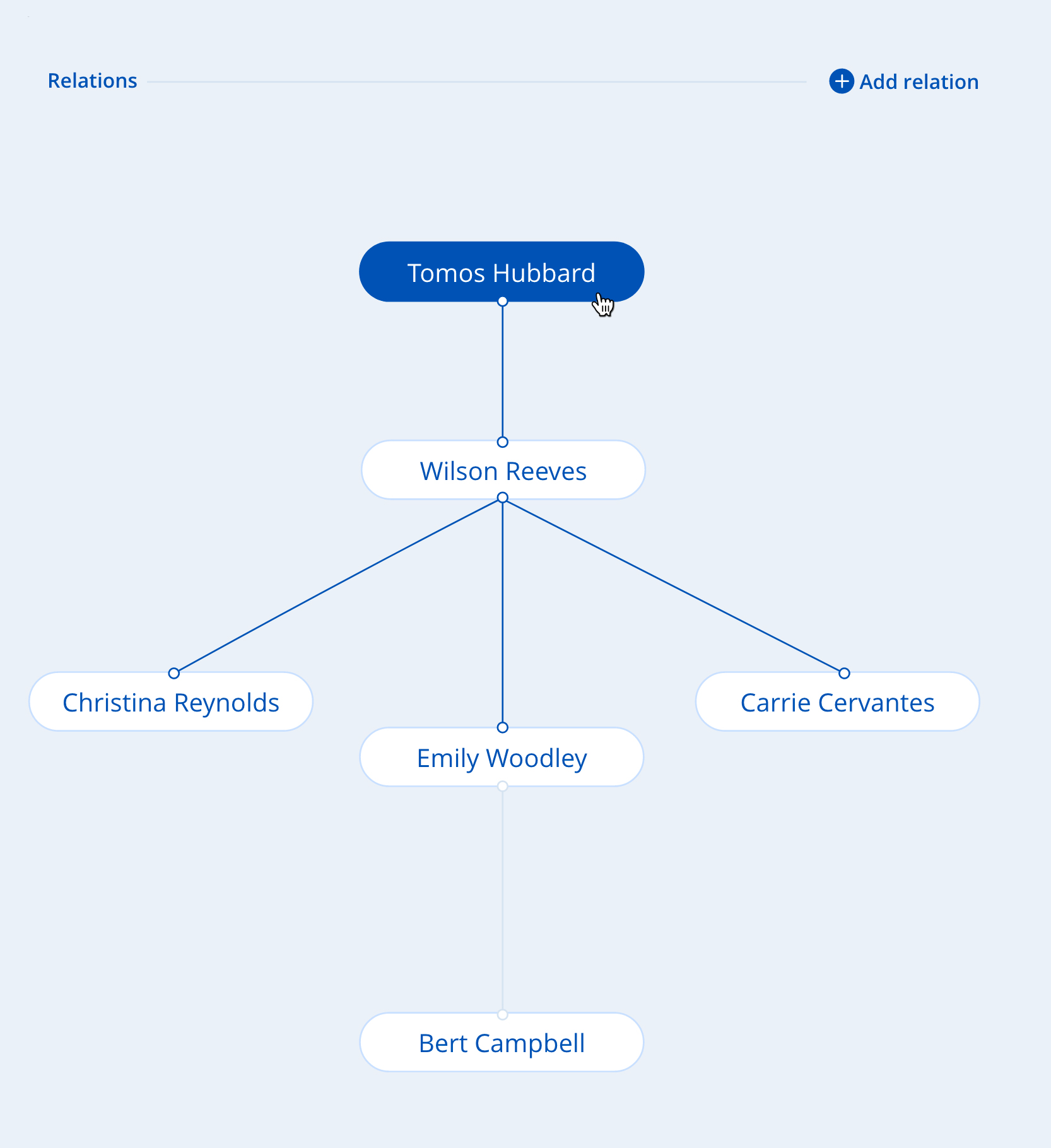
clients and contacts;
documents and files;
tasks, deadlines, and events;
time tracking and billing;
invoices and payments;
team collaboration;
client communication;
management reporting and analytics.
This difference matters because a law firm does not simply “sell” legal services. It delivers professional work over time, often across multiple matters, clients, documents, deadlines, invoices, and team members.
That work needs structure.
CRM vs legal practice management software: the key difference
The main difference is simple:
A CRM is usually built around leads and sales.
Legal practice management software is built around legal work.
A CRM helps a firm manage the early stage of the relationship: a potential client, a consultation, a follow-up, a sales opportunity, or a marketing campaign.
Legal practice management software helps manage what happens after that: the actual legal work.
For a law firm, this includes:
opening and managing a matter;
organizing documents;
assigning tasks to team members;
tracking deadlines and events;
recording billable time;
issuing invoices;
controlling payments;
communicating with clients;
tracking performance and financial indicators.
In other words, a CRM may help you win a client. Legal practice management software helps you serve that client professionally.
Why law firms often confuse CRM and legal practice management software
Many law firms ask whether they still need a CRM because they associate CRM with “client management.”
That is understandable.
Law firms need to store client information, keep communication history, manage follow-ups, assign tasks, and understand the status of client work. At first glance, all of this sounds like CRM functionality.
But in legal practice, client management is deeply connected with matter management.
A client is not just a contact in a database. A client may have several matters, related documents, deadlines, invoices, payments, team members, and communication history.
That is why a general CRM often becomes insufficient for legal teams. It may show who the client is and what the sales status is, but it usually does not provide a complete operational picture of the legal work.
Legal practice management software is designed to keep that context together.
Does a law firm still need a CRM?
Sometimes yes. But not always.
A separate CRM may be useful if your law firm has:
a dedicated sales or business development team;
a high volume of potential leads;
complex sales pipelines;
outbound campaigns;
lead scoring;
automated email sequences;
segmented marketing campaigns;
mass communication with potential clients.
In this case, a CRM can be used as a marketing and sales tool.
But for many law firms, the more urgent problem is not a lack of sales automation. It is the lack of structure in daily legal work.
If your team is still managing matters, documents, tasks, deadlines, invoices, and client communication across Excel, email, messengers, and separate folders, then a legal practice management system may create more value than a general CRM.
The practical question is not “CRM or no CRM?”
The better question is:
What do we need to manage first: leads or legal practice?
What Jusnote covers for client and matter management
Jusnote is a professional legal practice management platform built for law firms, legal teams, and lawyers who want to manage their practice in a more structured, transparent, and controlled way.
For many law firms, Jusnote covers the core client-related needs they often expect from a CRM, including:
storing clients and contacts;
keeping client-related information in one place;
connecting clients with matters and projects;
organizing documents within matters;
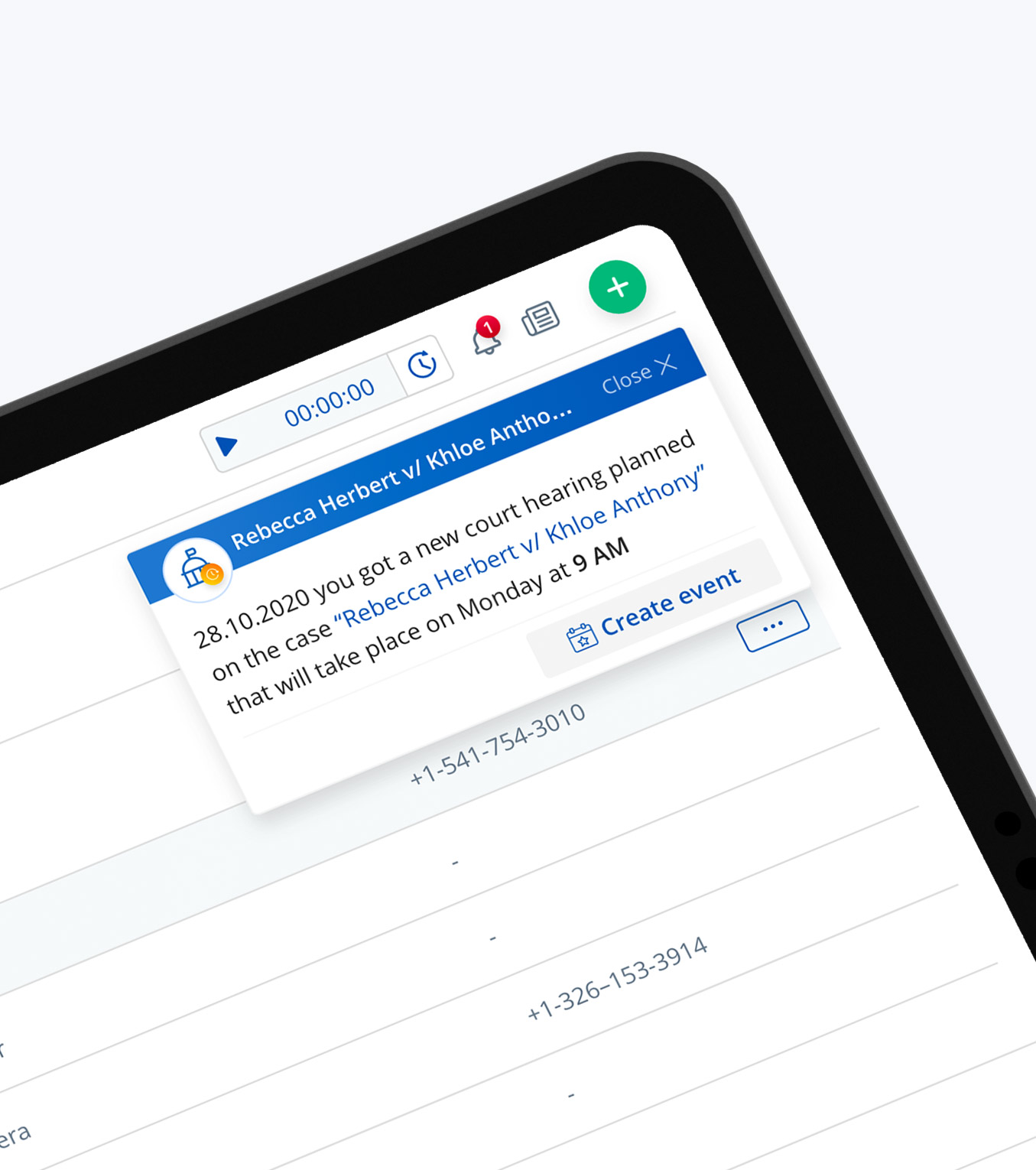
managing tasks, events, and deadlines;
tracking time and billable work;
creating invoices;
controlling payments and financial indicators;
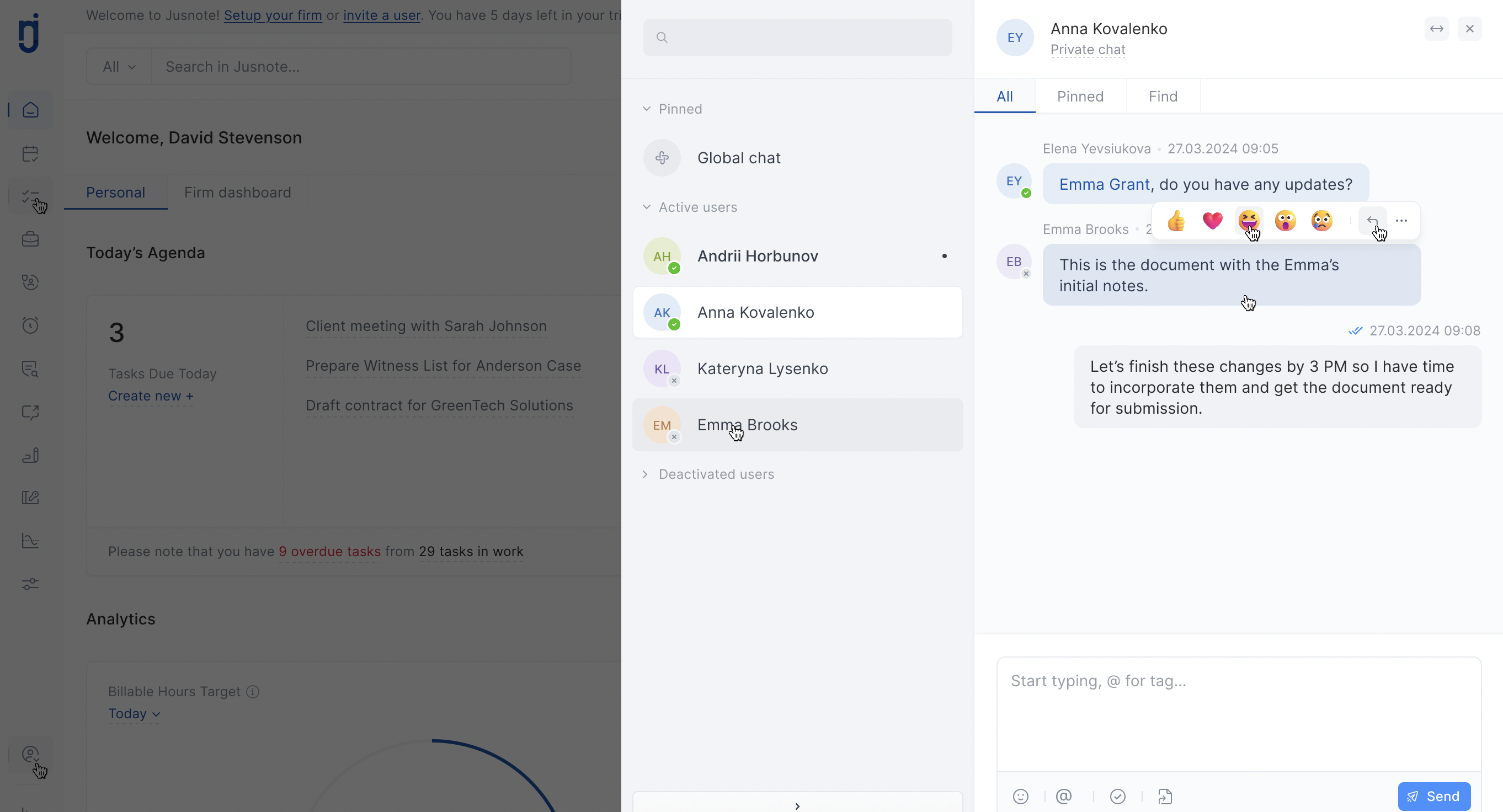
supporting client communication through Jusnote Connect;
coordinating team work around specific matters.
The key difference is that Jusnote does not treat the client as an isolated sales record.
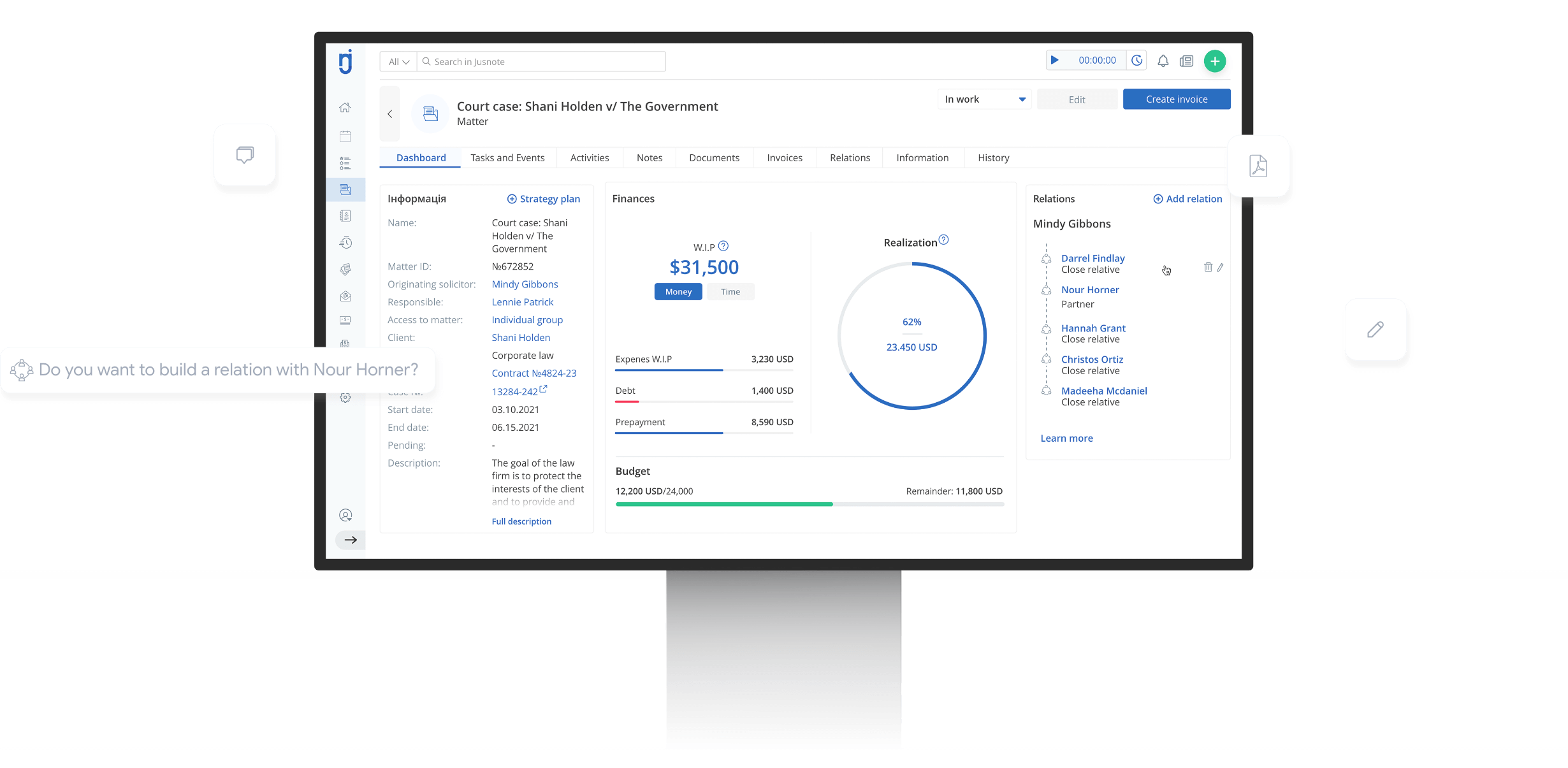
In Jusnote, the client is connected to the actual legal work: matters, documents, tasks, time entries, invoices, payments, communication, and reports.
That makes it more suitable for law firms that want to manage not just contacts, but the entire working cycle of their practice.
Is Jusnote a CRM for law firms?
Jusnote includes important client and contact management capabilities, but it should not be understood as a traditional sales CRM.
Jusnote is broader and more specialized.
A traditional CRM is usually focused on leads, pipeline stages, sales activity, and marketing campaigns. Jusnote is focused on legal practice management.
This means that Jusnote helps law firms manage the work that happens after a client becomes part of the firm’s practice:
matters;
documents;
tasks;
time;
billing;
payments;
reports;
team collaboration;
client communication.
For many firms, this means Jusnote can replace the need for a basic CRM if the main goal is to manage clients, matters, communication, billing, and internal work in one system.
However, if your firm needs advanced sales automation, automated email funnels, mass lead nurturing, or detailed marketing campaign management, you may still need a separate CRM or marketing platform alongside Jusnote.
What about sales pipelines and lead management?
This is one of the most common questions law firms ask when comparing CRM and legal practice management software.
Jusnote is not designed as a classic sales CRM built around cold outreach, marketing funnels, or mass email campaigns.
However, Jusnote can help structure client-related work that often overlaps with early sales or intake processes.
For example, a law firm can use Jusnote to:
store potential and existing clients in contacts;
record important client-related information;
create tasks for follow-up or internal review;
organize documents and notes;
create a matter or project after the client is accepted for work;
assign responsibility to team members;
track deadlines, invoices, payments, and reporting after the work begins.
For firms with a simple client intake process, this may be enough.
For firms with a complex sales funnel, automated lead statuses, scoring, outbound campaigns, and segmented marketing communication, a dedicated CRM may still be useful.
In that case, the CRM manages the lead journey before the client is engaged, while Jusnote manages the professional legal work after the client enters the firm’s practice.
Can Jusnote be used for email campaigns to potential clients?
Jusnote should not be viewed as a platform for mass email marketing or automated campaigns to potential leads.
That distinction is important.
Jusnote is designed for professional legal work: matters, documents, billing, reporting, team collaboration, and client communication.
Mass email campaigns, advertising funnels, lead nurturing, audience segmentation, and automated marketing sequences are usually better handled by dedicated CRM or email marketing platforms.
But once a potential client becomes a real client, or once a matter is accepted for work, Jusnote can become the central system for managing the relationship in the context of legal practice.
A good structure may look like this:
CRM or marketing platform: lead generation, email campaigns, sales pipeline, marketing automation.
Jusnote: matters, documents, tasks, time, billing, payments, reporting, team collaboration, and client communication.
This approach allows a law firm to use the right tool for each stage without forcing one system to do everything.
When legal practice management software should come first
For many law firms, the biggest operational problem is not the absence of a sales pipeline.
The bigger problem is fragmentation.
Matters are in one place. Documents are somewhere else. Tasks are in messengers. Deadlines are in calendars. Time is tracked manually. Invoices are created separately. Payments are checked outside the system. Reports are prepared only when someone asks for them.
This creates risks:
lost context;
missed deadlines;
unbilled time;
unclear responsibility;
slow reporting;
fragmented client communication;
limited visibility for partners and managers.
Legal practice management software should come first when a law firm needs better control over the actual delivery of legal services.
That is where Jusnote creates value.
It helps bring the main operational processes of a law firm into one professional workspace.
How to decide what your firm needs
Before choosing between a CRM and legal practice management software, ask a few practical questions.
Where does our client work become difficult?
If the problem is mostly about generating leads, managing marketing campaigns, tracking outbound sales, or automating email sequences, a CRM may be useful.
If the problem is about managing matters, documents, deadlines, tasks, time, billing, payments, reporting, and team visibility, legal practice management software should be the priority.
What happens after a client says yes?
If the firm immediately moves into documents, deadlines, tasks, time tracking, billing, and matter work, then a system like Jusnote is much closer to the real daily workflow.
Do we need a sales database or a practice management system?
A sales database helps manage opportunities.
A practice management system helps manage the business of legal work.
Most law firms eventually need the second one.
A practical model for law firms
The most practical approach is not to think of CRM and legal practice management software as direct competitors.
They solve different problems.
A CRM may be useful before the client is engaged.
Legal practice management software becomes essential when the client relationship turns into real legal work.
For many firms, Jusnote can serve as the central system for legal practice management and cover many basic client management needs. A separate CRM can be added later if the firm develops more advanced sales and marketing processes.
This allows the law firm to avoid unnecessary complexity at the beginning and focus first on the system that supports the core of its business: legal work.
Why Jusnote is different from a general CRM
Jusnote is built specifically for legal practice.
It helps law firms manage not only who the client is, but also what is happening with that client’s matters, documents, tasks, invoices, payments, and reports.
This legal context is what makes the difference.
A general CRM can show that a client exists.
Jusnote helps show what is happening with the client’s legal work.
A general CRM can track a sales opportunity.
Jusnote helps manage the matter after the work begins.
A general CRM can organize follow-ups.
Jusnote helps organize deadlines, tasks, documents, billing, and financial control.
For a law firm, that operational layer is often more important than the sales pipeline itself.
CRM and legal practice management software are not the same thing.
A CRM is mainly built around leads, sales activity, and marketing relationships.
Legal practice management software is built around the daily work of a law firm: matters, documents, tasks, time, billing, reporting, team collaboration, and client communication.
For law firms that need advanced marketing automation, outbound sales, mass email campaigns, or complex lead funnels, a CRM may still be useful.
But for firms that want to manage legal work more professionally, reduce fragmentation, improve visibility, control billing, and organize team workflows, legal practice management software should be the foundation.
Jusnote helps law firms move from scattered tools to one structured platform for managing legal practice.
See how Jusnote can help your firm manage matters, clients, billing, reporting, and teamwork in one professional legal practice management platform.
Book a Jusnote demo

 Case Management
 Time & Billing
  Task Management
  Team Communication
  Reporting & Analytics
  Client Management
  Client Portal
  Mobile App


 About company
  Our leadership
  Join the team
  How we design
  Software reviews
 Knowledge base
 Customer support
 Newsroom
 Jusnote Newsroom
  Search Newsroom
 Back to all publications